Security deposit return deadlines
Updated 2026-10-18, 7 min read
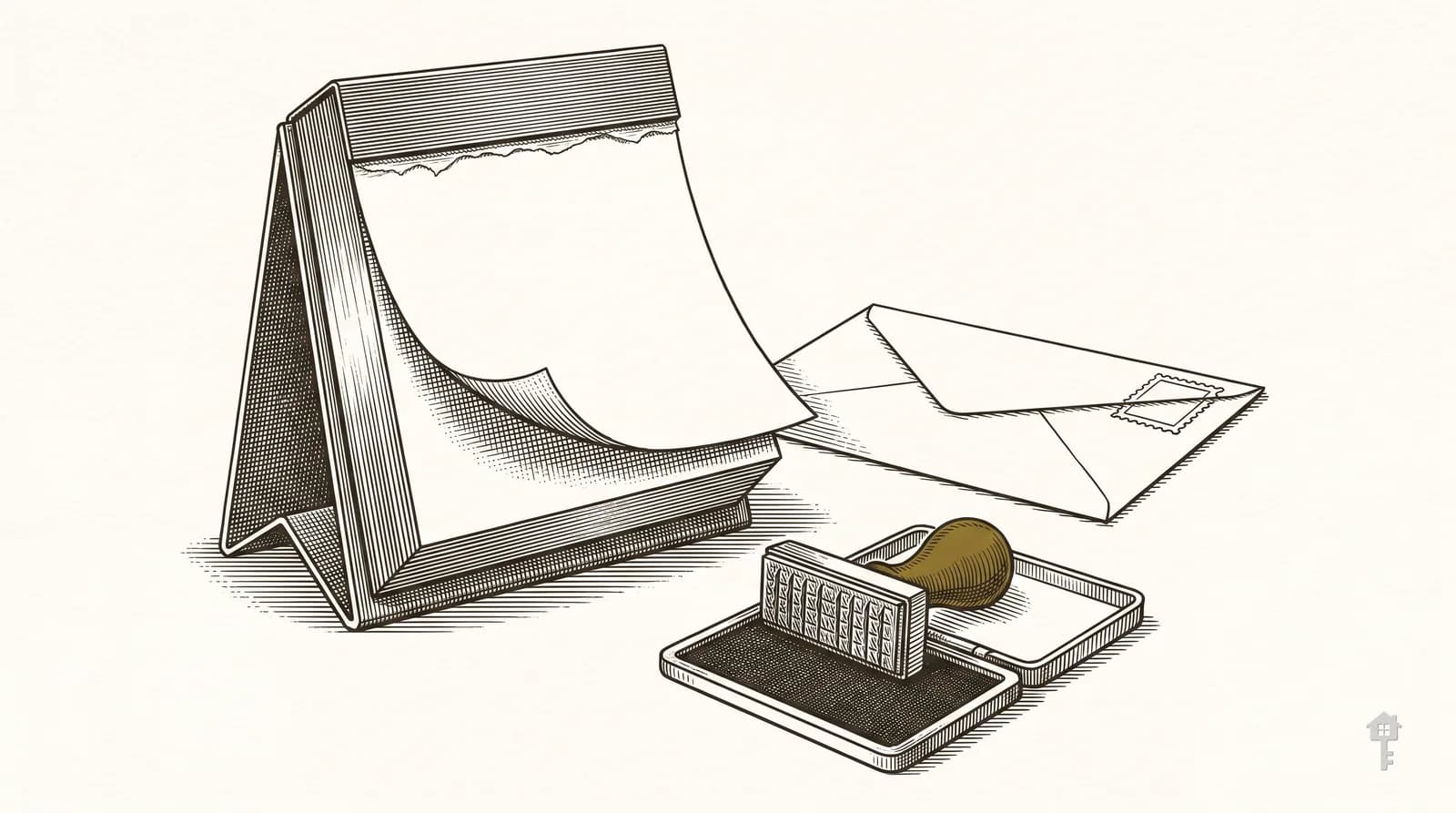
21 days
In most statutes it runs from the day the tenant vacates — not from the day you finish the repairs or receive the invoice.
Deposit deadlines are the sharpest edge in landlord-tenant law: short, mechanical, and penalised on a multiple. The deductions can be perfect and still worthless if the statement goes out a day late.
What starts the clock
Statutes pick one of three triggers: the day the tenant vacates, the day the tenancy legally terminates, or the day you receive a forwarding address. They are frequently different dates. California uses the first — 21 calendar days after the tenant has vacated the premises (Civ. Code § 1950.5, checked 2026-10-18).
Repairs do not pause the clock. If the contractor is booked out three weeks, you send the statement with a written estimate inside the window and reconcile afterwards where the statute allows it.
What has to be in the envelope
- An itemised statement, line by line, in plain words.
- Receipts or written estimates for the lines you charged.
- The balance owed, as a cheque or an electronic payment the tenant can actually access.
- Any interest owed on the deposit — see the interest calculator.
Send it to the forwarding address if you have one, and to the last known address if you do not. Keep proof of posting; a statement you cannot prove you sent is a statement you did not send.
What missing it costs
| Failure | Common consequence |
|---|---|
| Statement late | Deductions forfeited; full deposit returnable |
| Statement never sent | Statutory damages, often a multiple of the deposit (up to twice it in California, for bad faith) |
| Bad faith retention | Damages plus the tenant's legal costs |
| No itemisation | Treated as no statement at all |
Exact multiples are state-specific. The shape — forfeiture first, multiples second, costs third — is near-universal.
Running it as a system, not a scramble
- 01Diary the deadline the day notice is served, not the day the keys come back.
- 02Book the move-out inspection for the handover day itself.
- 03Get estimates the same week — an estimate is enough for the statement.
- 04Build the statement in the deduction calculator and post it with a week to spare.
Sources read for this page
- Cal. Civ. Code § 1950.5checked 2026-10-18